
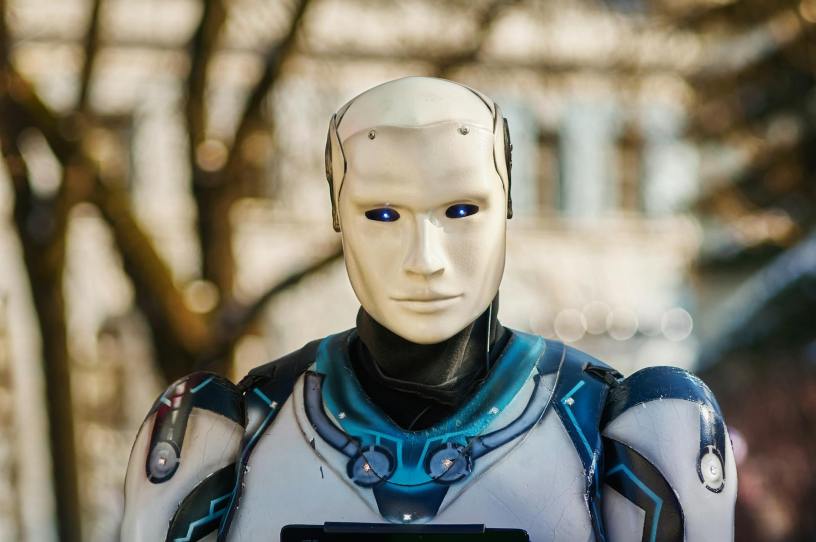
According to a report by Bank of America, there could be 1 million humanoid robots in operation by 2030, rising to 3 billion by 2060.[1] Heralding a transformation on a par with that of the automobile, humanoid robots have already captured investors’ attention in equity markets. Their rapid development, opening up vast new horizons, is a key structural driver of growth in robotics – an industry propelled by ever more powerful AI models, batteries and sensors.
By Christophe Pouchoy, Fund Manager for Echiquier Robots and Humanoids, La Financière de l’Échiquier.
The new face of industry
The highly automated factory of the future is already a reality, with more than 4.5 million industrial robots deployed worldwide and 540,000 installed in 2024 alone.[2] A driver of productivity, robotics is also helping to offset the global decline in labour supply, while reshaping sectors ranging from logistics to agriculture. The medical robotics market, pioneered by companies such as Intuitive Surgical, Stryker Corporation and Thermo Fisher Scientific, is expected to reach $138.5 billion by 2034.[3] Meanwhile, the autonomous vehicle market – robotaxis – is projected to exceed $2 trillion by 2040.[4]
Robots and humanoids
A pure embodiment of physical AI, humanoid robots are a major trend in robotics. New entrants capable of developing commercially viable humanoid AI solutions are set to play a pivotal role in driving global adoption. As with autonomous driving, the humanoid segment is dominated by US and, especially, Chinese players. China alone accounted for 85% of deployments in 2025.[5] The country has made humanoid robotics a national priority and is nurturing a growing number of champions, including UBTech Robotics, Agibot, Xiaomi, BYD and Unitree Robotics. Given the technological convergence between humanoid robots and autonomous vehicles, companies such as Tesla or Horizon Robotics are often active across both sub-segments. In Europe, with its long-standing industrial tradition, adoption is being driven by major groups such as Airbus, which are leveraging these technologies to transform production sites or make their products smarter. Sweden’s Hexagon, for instance, has developed a robot named Aeon capable of performing a wide range of tasks including object selection and inspection, as well as part digitisation using high-precision scanners.
While costs remain elevated – averaging around $50,000 today, compared with $1.5 million just five years ago – the deployment of humanoid robots in the real economy is expected to accelerate as prices continue to fall. Initially deployed in manufacturing environments, they could begin to see broader commercial applications involving direct interaction with customers as early as the next decade.
Comparable in scale to the advent of the automobile, this revolution is in our opinion creating compelling long-term investment opportunities that we seek to capture through our Echiquier Robots and Humanoids strategy.
[1] March 2025
[2] International Federation of Robotic, 2024
[3] Vantage Market Research, 2024
[4] Id., 2024
[5] Barclays
En savoir plus sur Ecorama Luxembourg
Abonnez-vous pour recevoir les derniers articles par e-mail.
